
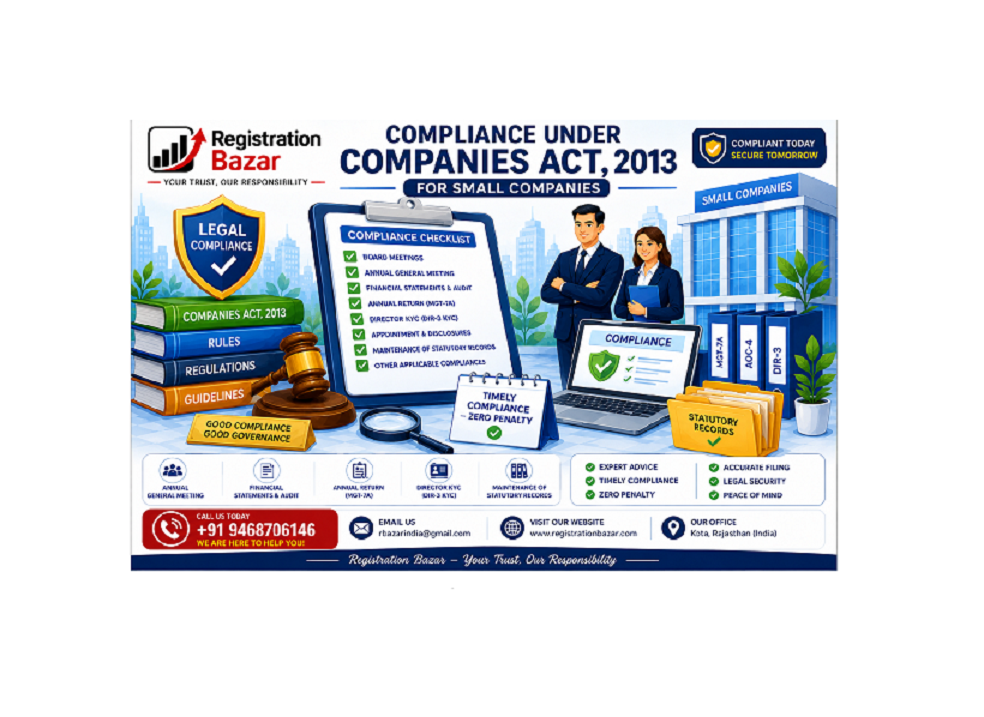
Every private company incorporated under the Companies Act, 2013 is required to comply with various annual filing requirements prescribed by the Ministry of Corporate Affairs (MCA). These annual ROC filings ensure legal compliance, transparency, and good corporate governance. Failure to file the required forms within the prescribed time may attract additional fees, penalties, and other legal consequences. This guide explains the major ROC annual filings applicable for Financial Year 2025–26, including AOC-4, MGT-7A, and DPT-3, along with their due dates, attachments, signing requirements, and penalties.
ROC Annual Filing Requirements for FY 2025–26
The major ROC filings applicable are:
- AOC-4 – Filing of Financial Statements
- MGT-7A – Annual Return (Applicable to Small Companies & OPCs)
- DPT-3 – Return of Deposits / Outstanding Money
1. Form AOC-4 (Filing of Financial Statements)
What is AOC-4 ?
After the financial statements are approved at the Annual General Meeting (AGM), every private company is required to file its financial statements with the Registrar of Companies (ROC) through e-Form AOC-4 under Section 137 of the Companies Act, 2013.
This enables MCA to maintain an official record of the company’s financial position.
Due Date
- Within 30 days from the date of AGM
- If AGM is not held, AOC-4 must still be filed within 30 days from the last date on which AGM should have been held, along with reasons for non-holding of AGM
Mandatory Attachments
- Audited Balance Sheet
- Statement of Profit & Loss
- Cash Flow Statement (where applicable)
- Notes to Accounts
- Board’s Report
- Auditor’s Report
Conditional Attachments
- AOC-1 (Subsidiary/Associate/Joint Venture)
- AOC-2 (Related Party Transactions)
- CSR-2 (CSR applicable companies)
- MR-3 (Secretarial Audit Report)
- ROC approval for AGM extension
- Statement explaining non-holding of AGM
Optional Attachments
- AGM Notice
- Declaration of Round Off
Signing & Certification
The form is digitally signed by:
- Director
- Manager
- CEO
- CFO (where authorised)
The form is certified by a Practising Chartered Accountant, Company Secretary or Cost Accountant wherever applicable.
Penalty for Non-Filing
| Defaulter | Penalty |
|---|---|
| Company | ₹10,000 + ₹100 per day (Maximum ₹2,00,000) |
| Officer in Default | ₹10,000 + ₹100 per day (Maximum ₹50,000) |
2. Form MGT-7A (Annual Return)
Introduction
MGT-7A is the abridged Annual Return prescribed under Section 92 of the Companies Act, 2013 for:
- Small Companies
- One Person Companies (OPCs)
It is a simplified version of Form MGT-7 introduced to reduce compliance burden.
Information Contained in MGT-7A
The return contains details relating to:
- Registered Office
- Principal Business Activities
- Share Capital
- Shareholding Pattern
- Directors
- Company Secretary
- Annual General Meeting
- Board Meetings
- Statutory Disclosures
Due Date
Within 60 days from the date of AGM.
If AGM is not held, it must be filed within 60 days from the last date on which AGM should have been held, along with reasons.
Mandatory Attachments
- List of Shareholders
- List of Debenture Holders
- Registered Office Photograph
Conditional Attachments
- ROC approval for AGM extension
Optional Attachments
- List of Directors
- Any supporting document
Signing
Digitally signed by:
- Director
- Company Secretary (if appointed)
If no Company Secretary is appointed, only the Director signs the form.
Penalty
The penalty provisions are the same as applicable for Form MGT-7.
| Defaulter | Penalty |
|---|---|
| Company | ₹10,000 + ₹100 per day (Maximum ₹2,00,000) |
| Officer in Default | ₹10,000 + ₹100 per day (Maximum ₹50,000) |
Is MGT-8 Required?
Certification in Form MGT-8 by a Practising Company Secretary is required only for:
- Listed Companies
- Companies having:
- Paid-up Capital of ₹10 Crore or more, or
- Turnover of ₹ 100 Crore or more
Small Companies filing MGT-7A are generally not required to obtain MGT-8 certification.
3. Form DPT-3
What is DPT-3?
Form DPT-3 is prescribed under Rule 16 of the Companies (Acceptance of Deposits) Rules, 2014.
It is used for reporting:
- Deposits accepted by the company
- Outstanding loans
- Other receipts of money not treated as deposits
Applicability
Every company (except Government Companies) having:
- Deposits
- Outstanding exempt borrowings
- Outstanding loans
- Outstanding receipts of money
as on 31 March is generally required to file DPT-3.
Companies having no outstanding money or loan as on 31 March are generally not required to file the form.
Due Date
Normally:
30 June every year
For FY 2025–26, the due date has been extended to 31 July 2026.
Common Transactions Reported
- Loans from Directors
- Inter-Corporate Loans
- Secured Loans
- Unsecured Loans
- Outstanding Advances
- Other exempt borrowings
Attachments
Mandatory
- Auditor’s Certificate (only for Return of Deposits)
Conditional
- Trust Deed
- Instrument Creating Charge
- List of Depositors
Optional
- Any supporting document
Signing
The form must be digitally signed by an authorised officer authorised by the Board through a Board Resolution.
Penalty
Under Rule 21 of the Companies (Acceptance of Deposits) Rules, 2014:
| Defaulter | Penalty |
|---|---|
| Company | Fine up to ₹5,000 |
| Officer in Default | Fine up to ₹5,000 |
| Continuing Default | Additional fine up to ₹500 per day |
Delayed filing generally requires payment of applicable additional filing fees. ROC may initiate action wherever required.
Annual ROC Compliance Calendar (FY 2025–26)
| ROC Form | Purpose | Due Date |
|---|---|---|
| AOC-4 | Financial Statements | Within 30 days of AGM |
| MGT-7A | Annual Return (Small Companies & OPCs) | Within 60 days of AGM |
| DPT-3 | Return of Deposits / Outstanding Money | 31 July 2026 (Extended) |
Why Timely ROC Filing is Important
Timely ROC compliance helps companies:
- Avoid additional filing fees
- Prevent penalties and prosecution
- Maintain Active Company Status
- Improve corporate governance
- Build credibility with banks and investors
- Ensure smooth due diligence during funding and transactions
Conclusion
Annual ROC compliance is not merely a legal obligation—it is a cornerstone of sound corporate governance. Every private company should maintain proper statutory records, conduct Board and General Meetings within prescribed timelines, and file all ROC forms accurately and on time.
Proper compliance safeguards the company from avoidable penalties while enhancing its credibility and regulatory standing.
Frequently Asked Questions (FAQs)
Is AOC-4 mandatory for every private company?
Yes. Every private company is required to file Form AOC-4 under Section 137 after approval of the financial statements.
Who is required to file MGT-7A?
Only One Person Companies (OPCs) and Small Companies are required to file MGT-7A.
What is the due date of DPT-3 for FY 2025–26?
The due date has been extended to 31 July 2026.
Can AOC-4 be filed if AGM is not held?
Yes. It must be filed within 30 days from the last date on which the AGM should have been held, along with the reasons for non-holding of the AGM.
What happens if ROC forms are filed late?
Late filing attracts additional fees and may also result in penalties under the Companies Act, 2013.
Disclaimer
The information contained in this article is based on the provisions of the Companies Act, 2013, the applicable Rules, and MCA notifications available on the date of publication. Readers are advised to verify subsequent amendments, circulars, and notifications before taking any action.
Add a Comment